Government pay levels explained: what a Pay Level means in rupees
What “Pay Level” in a notification means, the entry pay at common levels of the 7th CPC pay matrix, how DA, HRA and transport allowance add up, and how to estimate take-home pay.
By the Sarkari Posts editorial team · Updated · 7 min read
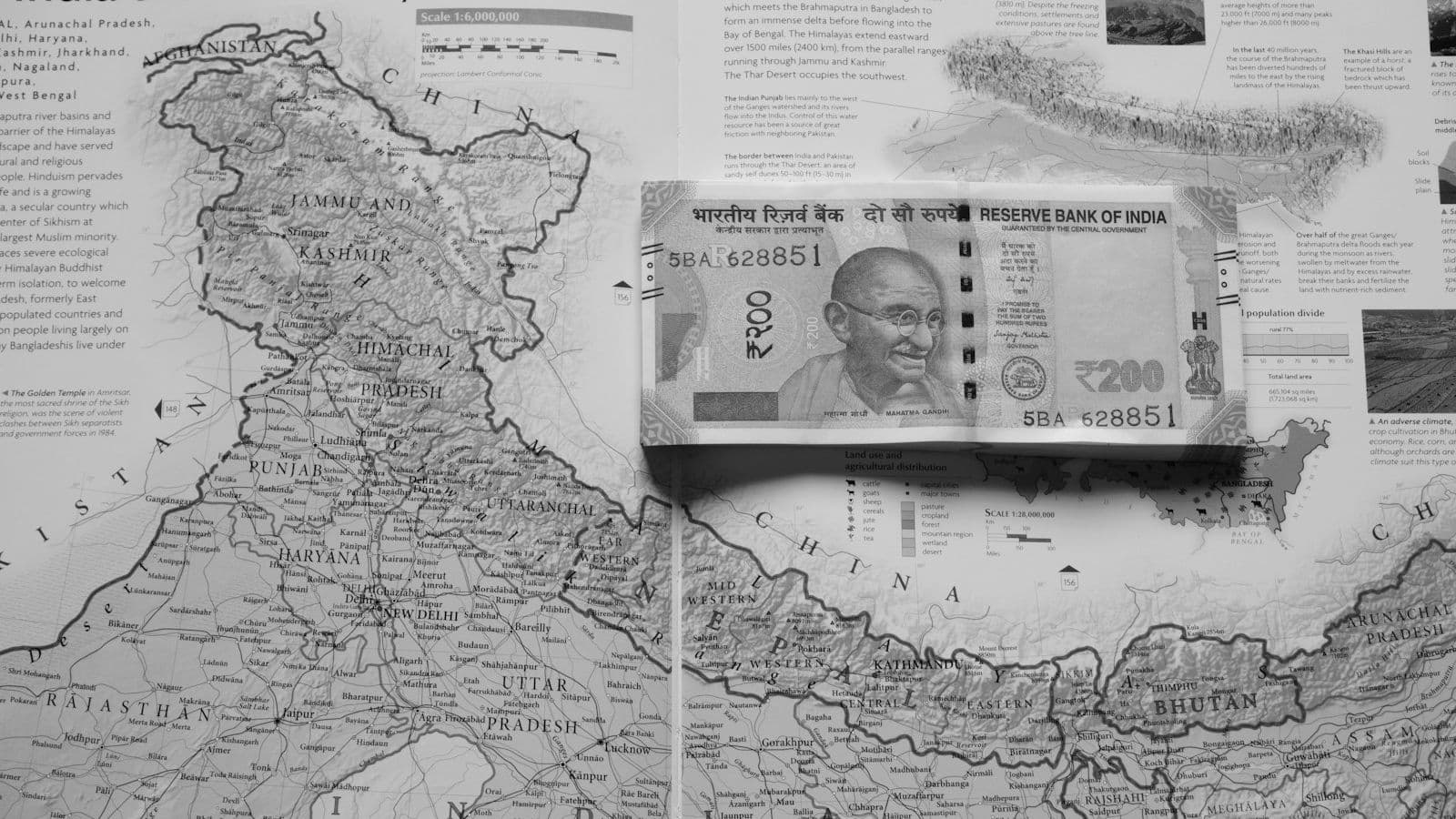
Central government notifications rarely state a salary. They say something like “Pay Level 4” or “Level 7 of the Pay Matrix”, and leave you to work out what that means. This guide explains how to turn a pay level into a monthly figure, what gets added to it and taken out of it, and why the amount that reaches your bank account differs from the number in the notification.
It describes central government pay. It is general information, not financial advice, and your department’s pay office is the authority on what you are actually paid.
What a pay level is
Since 1 January 2016, central government pay has been set by a pay matrix, introduced on the recommendations of the 7th Central Pay Commission (CPC) through the Central Civil Services (Revised Pay) Rules, 2016. The matrix replaced the older system of pay bands and grade pay.
Think of the matrix as a grid. Each column is a level, from Level 1 to Level 18. Each column has a series of cells, and each cell is a fixed amount of basic pay. When a notification says a post is in Level 4, it means the job is paid from the Level 4 column.
A new direct recruit starts at the first cell of the post’s level. That first cell is the entry pay, and it is the most useful number for an applicant.
Entry pay at common levels
These are the first-cell amounts in the pay matrix. Older notifications and many recruitment rules still refer to grade pay, so the corresponding grade pay is shown as well.
| Pay Level | Former grade pay | Entry basic pay (per month) |
|---|---|---|
| Level 1 | ₹1,800 | ₹18,000 |
| Level 2 | ₹1,900 | ₹19,900 |
| Level 3 | ₹2,000 | ₹21,700 |
| Level 4 | ₹2,400 | ₹25,500 |
| Level 5 | ₹2,800 | ₹29,200 |
| Level 6 | ₹4,200 | ₹35,400 |
| Level 7 | ₹4,600 | ₹44,900 |
| Level 8 | ₹4,800 | ₹47,600 |
| Level 10 | ₹5,400 (PB-3) | ₹56,100 |
The matrix continues up to Level 18, which has a single cell of ₹2,50,000. Whatever the level, this figure is basic pay only. It is the base on which most allowances are calculated, but it is not what you take home.
The annual increment
Each year you move one cell down the same level. In Level 1, the cell after ₹18,000 is ₹18,500; in Level 7, the cell after ₹44,900 is ₹46,200. Each step is about 3 per cent more than the one before, rounded to the nearest hundred rupees.
There are two increment dates, 1 January and 1 July, but you get only one increment a year. Which date is yours depends on when you joined. If you join between 2 January and 1 July, your first increment is due on the following 1 January. If you join between 2 July and 1 January, it is due on the following 1 July. Promotion moves you to a higher level under separate rules.
From basic pay to gross pay
Your gross monthly pay is basic pay plus allowances. Three matter most when you are comparing posts.
Dearness Allowance (DA)
DA compensates for rising prices. It is a percentage of basic pay, and the government revises it twice a year, with effect from 1 January and 1 July, by a formula based on the 7th CPC’s recommendations. Each revision is usually announced weeks or months after the date from which it applies. Because it is a percentage of basic pay, DA grows with every increment as well as every revision. For the current rate, look for the latest Union Cabinet decision on DA, published by the Press Information Bureau.
House Rent Allowance (HRA)
HRA depends on where you are posted. For HRA purposes the Department of Expenditure classifies cities as X, Y or Z, and pays a percentage of basic pay (not of basic plus DA). Its 2017 order set the rates at 24, 16 and 8 per cent, rising to 27, 18 and 9 per cent once DA crossed 25 per cent, and to 30, 20 and 10 per cent once it crossed 50 per cent. DA reached 50 per cent from 1 January 2024, so the highest rates apply.
| City class | Examples | HRA (% of basic pay) |
|---|---|---|
| X | Delhi, Greater Mumbai, Kolkata, Chennai, Bengaluru, Hyderabad, Ahmedabad, Pune | 30% |
| Y | Other large cities, such as Lucknow, Jaipur and Patna | 20% |
| Z | All other places | 10% |
HRA is paid subject to conditions in the government’s orders, so confirm your entitlement with your office when you join.
Transport Allowance
A fixed monthly amount, plus DA on that amount. It depends on your level and on whether you are posted in one of the larger cities listed in the Department of Expenditure’s order. For Levels 3 to 8, for example, it is ₹3,600 plus DA in the listed cities and ₹1,800 plus DA elsewhere; for Levels 1 and 2 it is ₹1,350 or ₹900, plus DA.
What is deducted
- Pension contribution. Civilian central government employees who joined on or after 1 January 2004 are covered by the National Pension System (NPS). You contribute 10 per cent of basic pay plus DA, and the government contributes 14 per cent. Since 1 April 2025, the Unified Pension Scheme (UPS) has been available as an option under NPS: the employee still contributes 10 per cent, and the government contributes 10 per cent plus an estimated 8.5 per cent to a pooled fund, in return for an assured payout subject to conditions. New recruits choose between them within 30 days of joining.
- Income tax, deducted at source if your income is taxable.
- Smaller deductions that vary by department and state, such as group insurance, health scheme contributions and, in some states, professional tax.
Estimating your in-hand pay
With those pieces you can make a rough estimate. Take a Level 4 post in a Z-class town, and, as an example, the DA rate that applied from 1 January 2026, which was 60 per cent of basic pay. Replace it with the current rate when you do your own sum.
- Basic pay: ₹25,500
- DA at 60 per cent: ₹15,300
- HRA at 10 per cent of basic: ₹2,550
- Transport Allowance: ₹1,800 plus 60 per cent DA on it, ₹2,880
- Gross pay: about ₹46,230
- Pension contribution, 10 per cent of ₹40,800 (basic plus DA): ₹4,080
- Before tax and smaller deductions: about ₹42,150
States, PSUs and banks pay differently
Everything above is the central government pay matrix. State governments set their own pay scales. The government itself notes that states usually adopt a central pay commission’s recommendations with some modifications, so a state’s levels, amounts and allowance rates can differ from the central ones. Public sector undertakings and banks have their own scales too, which their notifications quote in their own format. Read a state or PSU notification on its own terms; our guide to central and state government jobs covers the wider differences.
The 8th Pay Commission
The government constituted the 8th Central Pay Commission by a resolution dated 3 November 2025, after the Union Cabinet approved its terms of reference on 28 October 2025. The Cabinet asked it to make its recommendations within 18 months of its constitution. The government’s announcement noted that pay commission recommendations are usually implemented every ten years, and that on this trend their effect would normally be expected from 1 January 2026. That is an expectation, not a decision. As of September 2026 the Commission was still consulting employees and departments, and the 7th CPC pay matrix remains the one that notifications use. Until the government accepts and notifies new pay scales, the figures in this guide stand.
For the pay of a specific post, go to its notification. Our guide on how to read a government job notification shows where the pay level is given, and you can browse central government jobs to compare posts.
Sources
- Department of Expenditure: Central Civil Services (Revised Pay) Rules, 2016 · doe.gov.in
- Department of Expenditure: House Rent Allowance order · doe.gov.in
- Department of Expenditure: Transport Allowance order · doe.gov.in
- PIB: Dearness Allowance from 1 January 2026 · pib.gov.in
- PFRDA: NPS for central government employees · pfrda.org.in
- PFRDA: Unified Pension Scheme · pfrda.org.in
- PIB: terms of reference of the 8th Central Pay Commission · pib.gov.in
- 8th Central Pay Commission: what’s new · 8cpc.gov.in
Checked against these official sources on . Rules change — the recruitment notification is always the authority.